
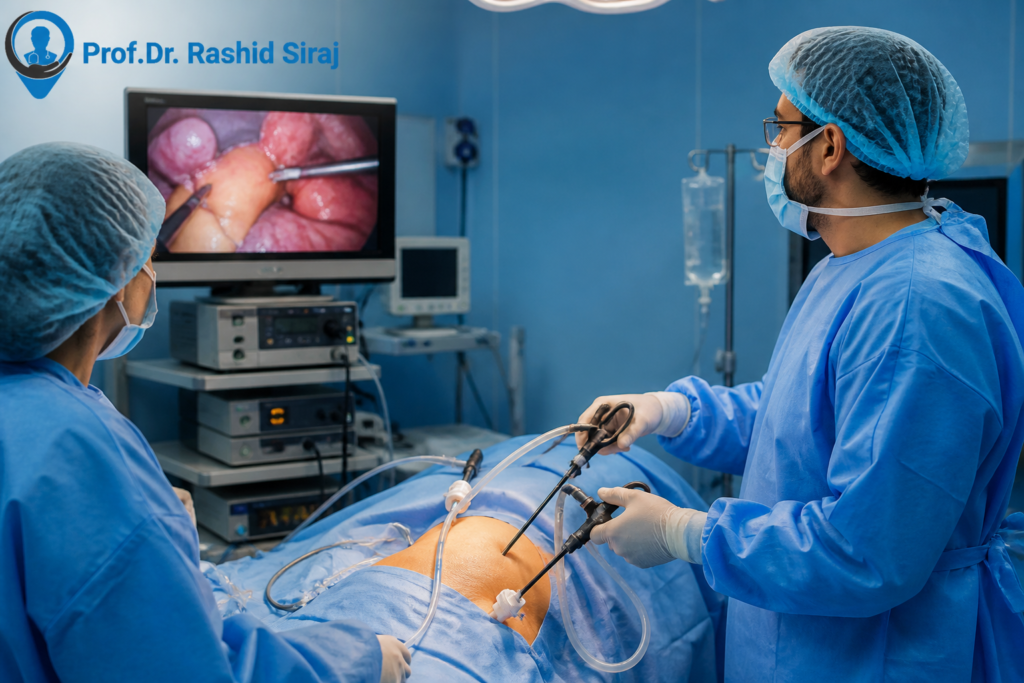
When a surgeon suggests that a patient undergo surgery, then the immediate question that pops up into the mind of many people that what is laparoscopic surgery. Today, in the current scenario of medicine, laparoscopic surgery plays an integral part. It is considered as a step between technology and surgery. This type of surgery basically refers to moving from open surgery to keyhole surgery through fiber-optic cameras. Most of the time, patients tend to find out more about it in order to be at peace with respect to recovery period and scarring.
What Is Laparoscopic Surgery and How Does It Work?
Laparoscopic surgery, keyhole surgery, or minimal-invasive surgery is a new type of surgery which involves small cuts in place of large cuts during surgery.
The surgeon inserts a special device called a laparoscope, which has a video camera and light attached to it, into the body to help during the surgery process.
The best surgeon will see what’s happening in there on an ultra high-quality screen and perform the surgery using special equipment.
Such surgeries are most common for abdominal and pelvic surgeries due to less traumatism to the body.
Common Laparoscopic Procedures
To truly grasp the versatility of this method, it helps to see how it is applied across different medical specialties. The following table compares the most frequent procedures performed today.
| Procedure Type | Primary Purpose | Common Conditions Treated | Average Recovery |
| Laparoscopic Cholecystectomy | Gallbladder removal | Gallstones, Inflammation | 1 Week |
| Laparoscopic Hernia Repair | Strengthening the abdominal wall | Inguinal or Umbilical Hernias | 1–2 Weeks |
| Laparoscopic Appendectomy | Emergency appendix removal | Acute Appendicitis | 1–2 Weeks |
| Gynecological Laparoscopy | Reproductive organ treatment | Endometriosis, Ovarian Cysts | 2 Weeks |
| Bariatric Laparoscopy | Weight loss intervention | Gastric Bypass, Sleeve Gastrectomy | 3–4 Weeks |
| Diagnostic Laparoscopy | Internal visualization | Unexplained pelvic/abdominal pain | 2–5 Days |
Benefits of Laparoscopy
It is a procedure that is often favored because of the many advantages associated with it.
1. Small Incisions
The incisions that are made are small, which means that there will be minimal pain and scarring. This helps improve patient self-esteem when recovering from the procedure.
2. Rapid Healing
Individuals often recover much faster after the surgery than after traditional procedures. Patients are often able to resume their regular routines much faster, depending on the procedure.
3. Minimal Postoperative Pain
The minimal trauma inflicted on body tissue reduces the level of pain felt after laparoscopy. This makes recovery much easier.
4. Reduced Hospital Stay
Most patients are discharged within 24–48 hours depending on the procedure. This reduces hospital costs and allows recovery in a familiar home environment.
5. Minimal Risk of Infections
There is less risk of surgical site infections because the wounds are small. This ensures quick healing and reduces the use of antibiotics in patients.
Why People Search Laparoscopic Surgery
An insight into the patient’s perspective will help understand why many people search for what is laparoscopic surgery.
- Fear of Open Surgery: Most patients fear extensive incisions and lengthy healing periods, thus opting for minimally invasive surgery.
- Desire for Faster Healing: Patients desire to recover quickly and resume their regular activities soon.
- Better Cosmetic Results: Patients desire surgeries that leave fewer scarring marks, especially on the abdomen.
- Medical Safety Concerns: Patients desire safe surgical operations with reduced complications and effective surgical control.
Details of The Process
Laparoscopic surgery is a highly choreographed event that requires a coordinated surgical team.
Anesthesia: First, the patient is made unconscious by administering anesthesia.
Making the Ports: The surgeon will make the “keyhole” incision first. A trocar is then used to make a passage through which the instruments can pass.
Inflation of the Cavity: Air (carbon dioxide) is pumped into the body cavity to inflate the space to provide a good viewing room.
Scanning the Area: The surgeon inserts a laparoscope and visually examines the area to diagnose the condition or determine what needs to be done.
Execution of Surgery: With the aid of 2 or 3 more ports, the surgeon uses micro-scissors, graspers, and staplers to perform the operation.
Recovery Phase:When removing an organ such as the gallbladder, the surgeon places it in a surgical bag and removes it through one of the small incisions. The surgeon then allows the air in the body to escape and sutures the tiny wounds.
Laparoscopy Surgery Treatments
The laparoscopy surgery is applied in various branches of medicine:
Surgical Conditions:
Gall stones
- Hernia
- Appendicitis
- Ovarian cyst
- Fibroid uterus
- Infections in abdomen
Diagnostic Use:
- Chronic pain in abdomen
- Investigation for infertility
- Detection of internal bleeding
Some examples:
- Laparoscopic Hernia Surgery in Lahore
- Laparoscopic Ovarian Cysts Removal
- Diagnostic Laparoscopy Treatment
Postoperative Care and Recovery Process
Recovery from laparoscopic surgery follows an expected path, but patients must follow certain medical guidelines to ensure optimal outcomes.
First 24 Hours After Surgery
The patient might experience bloating or “referred pain,” which occurs due to the irritation of the diaphragm caused by the remaining carbon dioxide. Walking around the room helps absorb that gas faster.
First Week
Patients must keep the wound clean and dry. They can move freely and do light activities, but they should avoid strenuous physical activity and lifting anything heavier than 10 pounds.
Pain Management
Doctors can manage pain associated with such minor surgery using simple analgesics, and small wounds significantly reduce the need for strong medication.
Dietary Adjustments
Depending on the kind of procedure performed, especially those involving the gastrointestinal tract, the doctor might prescribe a fluid/soft-food regime for the first several days.
Long-term Healing
Three weeks after surgery, internal tissues complete healing, and the doctor schedules a check-up visit to physically inspect the healing process.
Risks and Safety Considerations
Despite the list of benefits, one must acknowledge that surgery always poses some degree of risk.
So, what about the safety of laparoscopic surgery? The likelihood of wound infection and hernias resulting from this procedure is less than with open surgery. Nevertheless, potential risks may involve excessive bleeding inside the body, damage to neighboring organs, or a negative response to anesthesia.
Every patient is not suited for such a procedure. For instance, patients who have had several operations before, causing the formation of scar tissues (“adhesions”), might face complications during surgery. Doctors prefer open surgery in emergency cases involving heavy internal bleeding.
Importance of Surgeon Expertise
Laparoscopic surgery is not only a healthcare fad but an advanced philosophy of surgery aimed at providing quality living for patients. People should not associate the term “minimally invasive” with the idea that the procedure is “simple.”
It takes the skills and experience of a surgeon whose level of spatial awareness is extremely high.
Choosing a professional, make sure that you consult someone who has successfully completed hundreds of laparoscopies and knows how to estimate your risks precisely. Combining high-tech solutions with the skillful hands of a surgeon will make the process of achieving health faster, safer, and much more pleasant. If you are looking for expert care, you can consult Prof. Dr. Rashid Siraj for professional evaluation, advanced laparoscopic treatment, and personalized surgical guidance.