
Benefits of Robotic-Assisted Surgery for Modern Healthcare
Surgery is a scary experience for patients. You’re inevitably going to be asking yourself questions about pain, length of recovery, possible complications and the procedure itself. Fortunately there has been a huge amount of development in medical technology which has given surgeons new tools with which to perform certain procedures to a much greater degree of control and precision. One such tool is robotic assisted surgery.
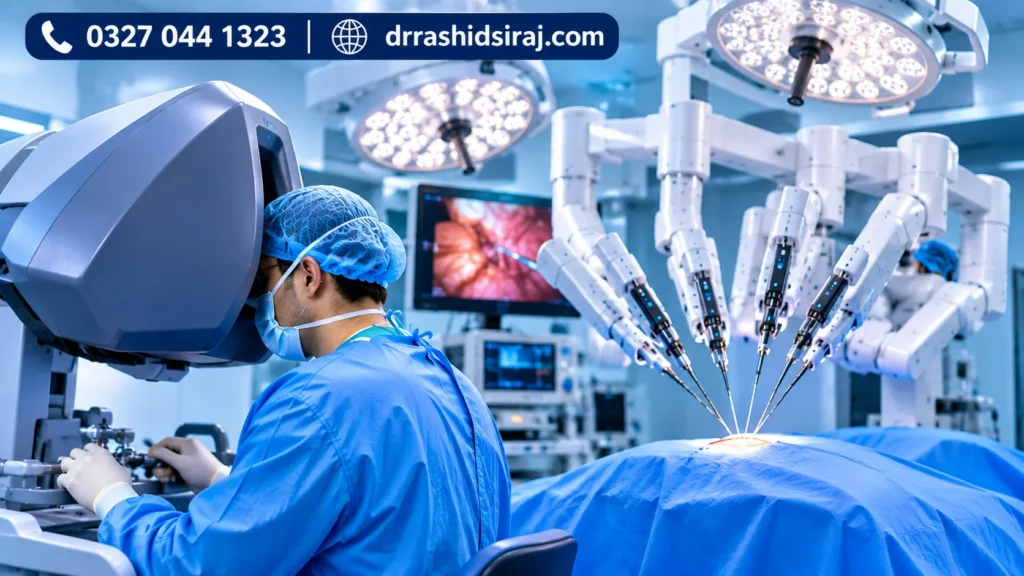
Robotic assisted surgery has become an important element of modern surgical care. It enables the surgeon to use sophisticated instruments and high quality camera systems, all whilst remaining in complete control of the procedure. For many patients it can mean smaller incisions, less discomfort and a smoother recovery.
What is robotic assisted surgery?
The name might sound rather complicated, the concept is actually quite simple. Robotic assisted surgery is where a surgeon, who has been properly trained, uses a robotic system to perform the surgery.
7 Benefits of Robotic-Assisted Surgery
- Greater Precision During Surgery
When it comes to surgery, even the smallest movements matter. You’re often working around delicate tissue, nerves and blood vessels where you have to be absolutely precise.
Robotic assisted systems give the surgeon access to instruments which can move in a number of different directions allowing for a level of control that is not always possible with conventional instruments, particularly in the case of working in difficult to reach areas.
The system also helps the surgeon to maintain a steady view of the field, enabling a very careful and controlled operation.
- Smaller Incisions and Less Scarring
One of the reasons so many patients are keen on robotic assisted surgery is the prospect of smaller incisions.
In suitable procedures surgeons can go in via a minimally invasive approach, making a number of small incisions rather than one large one. Specialised instruments and a camera are then inserted through those small incisions.
For patients, this may mean:
- Smaller surgical wounds.
- Less damage to the surrounding tissues.
- Less noticeable scars.
- Less discomfort post op.
Of course the results will vary depending on the type of procedure and the individual patient.
- A Smoother Recovery After Surgery
Getting back to normal life is something most patients look forward to after an op. Recovery takes time, of course, but the surgical approach can make a difference.
As many robot assisted procedures involve smaller incisions there can be less post op discomfort and patients may be back to their normal activities much sooner.
Depending on the procedure, potential benefits may include:
- Getting out of bed and moving about earlier.
- Spending less time in hospital.
- Back to normal activities as soon as possible.
- A more comfortable recovery experience.
It’s vital to bear in mind that recovery is very much individual. Age, general health and the complexity of the surgery all have an effect.
- A Clearer View of the Surgical Area
Surgeons need to see precisely what they’re working on, particularly in the course of a complex procedure.
Robotic surgical systems provide magnified, high definition views of the surgical field. Some systems go further and provide 3D visualisation which gives the surgeon a much better sense of depth.
This can assist in the identification of small anatomical structures and in working around delicate areas. Improved visualisation also enables the surgeon to assess the surgical field at all times during the procedure.
- Better Instrument Movement in Difficult Areas
Not every bit of the body is easy to get to during surgery. Some operations require the surgeon to be working in very confined spaces where the normal instruments may not have much movement at all.
Robotic instruments have flexible joints which allow them to move in a number of different directions. This gives the surgeon greater control when doing fine work.
For certain complex procedures this flexibility can be very useful. It doesn’t in any way replace the surgeon’s experience, it just gives them another tool with which to tackle difficult surgical work.
- Less Blood Loss in Some Procedures
Blood loss is another issue in surgery. In some cases robotic assisted techniques can actually help the surgeon to manipulate the tissues and blood vessels with greater control.
However that’s not guaranteed. It all depends on the procedure, the patient’s condition and the surgeon’s experience.
- Is robotic assisted surgery right for everyone?
Although robotic assisted surgery has a number of potential advantages it is not the right option for every patient.
Before recommending any procedure the surgeon will look at the patient’s history, the patient’s current state and the type of operation that is required.
Some important factors include:
- The nature and stage of the illness.
- The patient’s general state of health.
- Any previous surgeries.
- Potential risks and anticipated benefits.
- The surgeon’s training and experience.
- Is suitable robotic technology available?
The Future of Robotic-Assisted Surgery in Modern Healthcare
Robotic assisted surgery is increasingly a recognised part of modern medicine. As the surgical systems continue to evolve and more healthcare professionals go on to receive specialist training, the role of robotics in a range of procedures is likely to continue to grow.
In Pakistan patients are also increasingly interested in the more advanced surgical options. There’s a desire to understand how these work, what the benefits are and whether they’re available here.
However wider access to robotic surgery will be down to a number of factors including the availability of the technology, the availability of trained surgeons, the cost of treatment and the availability of appropriate healthcare facilities.
As Dr. Rashid Siraj highlights, patients should take the time to understand their treatment options and discuss their concerns with a qualified surgical specialist.
If you or someone in your family is considering robotic-assisted surgery, a consultation with an experienced surgeon is a good place to start. The right approach should always be based on your medical condition, individual needs and the treatment options available to you.