
Introduction
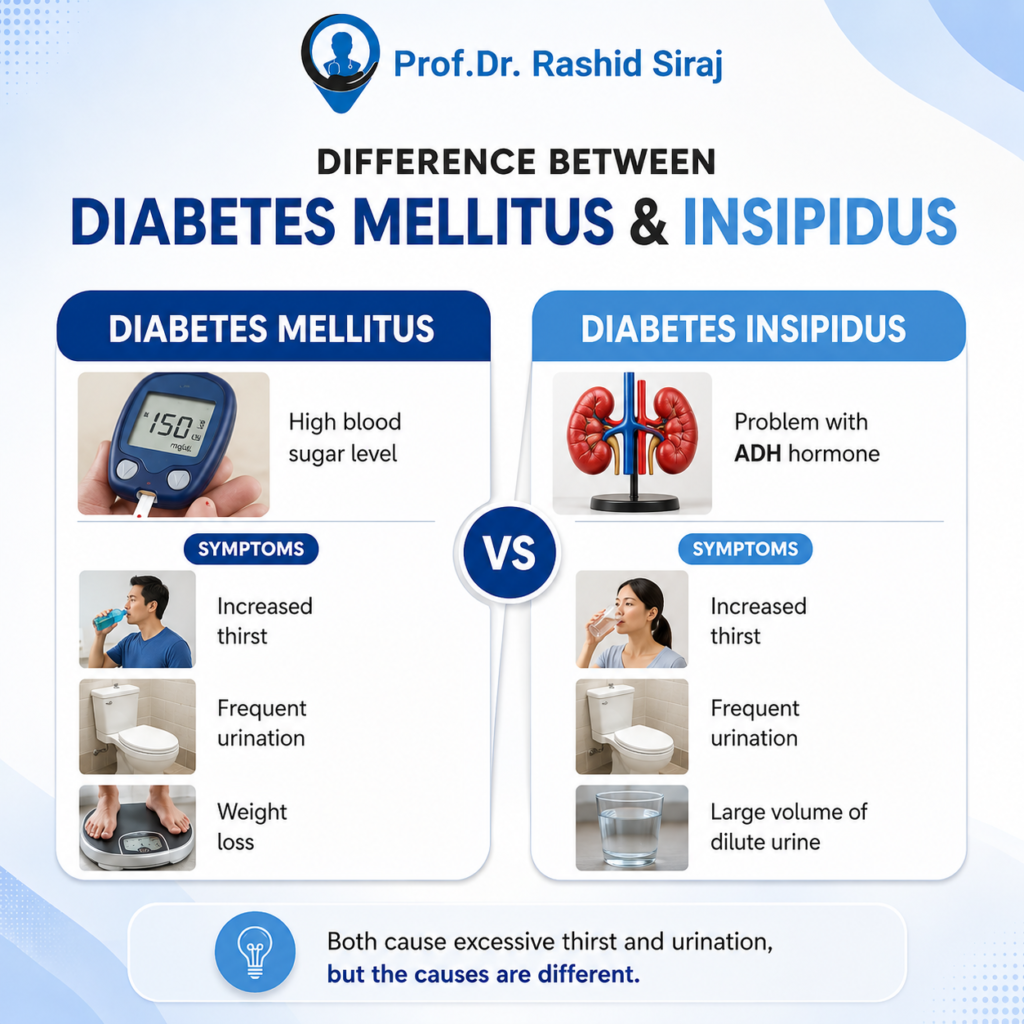
The difference between diabetes mellitus and insipidus is often confusing for many patients because both conditions share symptoms like excessive thirst and frequent urination. However, these disorders affect completely different hormones and organs inside the body. Many people search for the difference between diabetes mellitus and insipidus to understand whether both diseases are related to blood sugar levels. In reality, one condition mainly affects glucose regulation, while the other impacts fluid balance and urine concentration. Understanding these differences helps patients seek timely medical care and avoid complications caused by delayed diagnosis.
Although both conditions share the word “diabetes,” they are entirely different medical disorders with separate effects on the body.
What is Diabetes Mellitus?
Diabetes mellitus is a condition that affects the body’s ability to regulate blood sugar levels. It usually develops when the pancreas does not produce enough insulin or when the body cannot properly use insulin. As a result, glucose remains in the bloodstream instead of entering the cells for energy production.
This condition is more common worldwide and includes type 1 diabetes, type 2 diabetes, and gestational diabetes. High blood sugar levels over time can damage the nerves, kidneys, blood vessels, and eyes if proper treatment is not provided.
What is Diabetes Insipidus?
Diabetes insipidus is a rare hormonal disorder that affects the body’s fluid balance and urine concentration. Unlike diabetes mellitus, it has no connection with blood sugar levels or insulin production.
This condition develops when the body does not produce enough vasopressin hormone or when the kidneys fail to respond properly to it. Because of this problem, the kidneys cannot conserve water effectively, leading to excessive urination and severe thirst.
Major Differences Between Both Conditions
| Feature | Diabetes Mellitus | Diabetes Insipidus |
| Main Hormone | Insulin | Vasopressin (ADH) |
| Affected Organ | Pancreas | Kidneys/Brain |
| Blood Sugar | High | Usually Normal |
| Main Problem | Glucose control | Fluid balance |
| Urine Type | Sugar-containing urine | Diluted urine |
| Common Treatment | Insulin/medication | Hormone therapy |
This comparison clearly explains the difference between diabetes mellitus and insipidus and why both diseases require completely different treatments.
Why Both Conditions Sound Similar
The confusion mainly comes from the word “diabetes,” which historically refers to excessive urination, a condition that should be properly evaluated by the best surgeon doctor for accurate diagnosis and treatment.
Similar Symptoms
Both conditions can cause:
- Increased thirst
- Frequent urination
- Fatigue
- Dehydration
Different Disease Mechanisms
Although the symptoms appear similar, both diseases affect entirely different hormones and organs.
Different Hormonal Problems
Diabetes mellitus involves insulin and blood sugar control, while diabetes insipidus involves vasopressin and water regulation.
Symptoms of Diabetes Mellitus
Excessive Hunger: Patients often feel unusually hungry because body cells cannot properly use glucose for energy.
Fatigue and Weakness: High blood sugar levels can make patients feel tired, weak, and physically exhausted throughout the day.
Slow Wound Healing: Cuts and wounds may heal slowly due to poor blood circulation and high glucose levels.
Vision Change: Long-term blood sugar imbalance may affect the eyes and lead to blurred vision.
Symptoms of Diabetes Insipidus
Severe Thirst: Patients feel extremely thirsty because the body loses excessive water through urine.
More Urine: The kidneys produce large quantities of diluted urine throughout the day and night.
Dehydration: Loss of body fluids may cause dehydration, dry mouth, and dry skin.
Muscle Weakness: Electrolyte imbalance caused by fluid loss can lead to muscle weakness and fatigue.
Causes Behind Diabetes Mellitus
Type 1 Diabetes
This diabetes develops when the immune system mistakenly attacks the insulin-producing cells in the pancreas, reducing the body’s ability to control blood sugar levels properly.
Type 2 Diabetes
This diabetes occurs when the body gradually becomes resistant to insulin, making it difficult for glucose to move from the bloodstream into the cells.
Lifestyle and Genetic Factors
Obesity, unhealthy eating habits, physical inactivity, family history, and hormonal imbalance significantly increase the risk of developing diabetes mellitus.
Causes Behind Diabetes Insipidus
Hormonal Imbalance
Diabetes insipidus develops when the body does not produce enough vasopressin hormone, which is responsible for regulating fluid balance and urine concentration.
Kidney Response Problems
Certain kidney disorders can prevent the kidneys from responding properly to vasopressin, leading to excessive water loss through urine.
Pregnancy and Medications
Pregnancy-related hormonal changes and some medications may also contribute to the development of diabetes insipidus in certain patients.
How Doctors Diagnose These Conditions
- Doctors use fasting blood sugar and HbA1c tests to diagnose diabetes mellitus and evaluate glucose levels.
- Urine testing helps identify excess glucose or determine whether urine is too diluted.
- Doctors may use a water deprivation test to diagnose diabetes insipidus and evaluate how the body controls fluid balance.
- Brain imaging through MRI scans may help identify problems affecting the hypothalamus or pituitary gland.
- Doctors may review the patient’s medical history and symptoms to better understand the underlying hormonal or metabolic disorder.
- Additional blood tests may help evaluate sodium levels, kidney function, and hormone imbalance related to both conditions.
Treatment Options for Both Diseases
Diabetes Mellitus Treatment
- Insulin therapy
- Oral diabetes medications
- Healthy diet management
- Regular physical activity
Diabetes Insipidus Treatment
- Desmopressin hormone therapy
- Fluid balance monitoring
- Low-salt diet in some cases
- Treatment of kidney-related causes
Proper treatment helps control symptoms and prevents long-term complications.
Importance of Early Medical Care
The early diagnosis is an essential factor in avoiding complications associated with either disease. Any individual with symptoms such as increased thirst and urine production, feeling fatigued, being dehydrated, or sudden changes in weight should seek professional examination at once.
Final Thoughts
By learning more about the similarities and differences between diabetes mellitus and insipidus, we have learned about how each affects very different hormones and systems within the body. While diabetes mellitus affects blood glucose levels, diabetes insipidus affects the body’s water balance and urine concentration.
Through accurate diagnosis, appropriate treatment, good health management, and medical monitoring, patients will be able to handle the symptoms associated with the disease effectively and enhance their quality of life. Should you experience symptoms associated with diabetes, visit Dr. Rashid Siraj for medical evaluation and effective treatment plan.