Thyroid Surgery in Lahore, Pakistan: What Patients Should Know Before Treatment
If you have a lump in the neck, or issues swallowing, you may be wondering if treatment is required. Or, if medication or surgery is needed?
Whilst many people in Pakistan suffer from thyroid related problems, not all conditions require surgery. Whether surgery is required depends on the diagnosis, the size of the gland, the results of investigations, and how well the patient is as a whole.
Understanding more about thyroid surgery, and recovery, can help you have an informed discussion with your surgeon.
What is Thyroid Surgery?
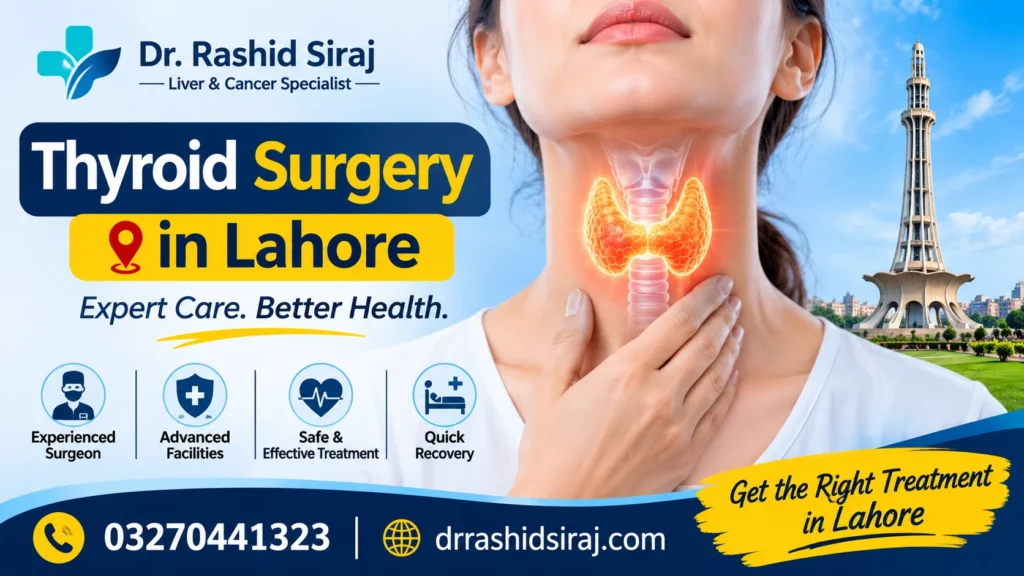
Thyroid surgery is performed to remove part or all of the thyroid. The thyroid is a small butterfly shaped gland found in the front of the neck. It releases hormones to control many essential body functions, including metabolic rate, body temperature, heart rate etc.
Thyroid surgery may be required if other treatments are not sufficient for managing a thyroid condition, or if there is concern for cancer.
Surgery may be required for:
Large goitre
Nodule/s causing pressure and/or symptoms
Suspicious or confirmed cancer.
Specific hyperthyroid states
Enlarged thyroid causing difficulty in breathing or swallowing.
Whether you require surgery will be determined based on physical examination and investigations.
When is Surgery Required?
Not all lumps in the thyroid, or abnormal investigations, necessarily mean surgery is required. Benign nodules may simply be monitored regularly.
However, surgery may be required in the following cases:
Large Goitre
A very enlarged thyroid gland can cause a swollen neck, difficulty swallowing and pressure on the windpipe.
Suspicious Nodules
If nodules have shown suspicious findings on ultrasound or biopsy, further investigations may be required. Depending on findings and clinical assessment, surgery may be required.
Cancer
Thyroid cancer may often require surgery. The type and extent of surgery will depend on the nature and stage of the cancer.
Hyperthyroidism
In some cases of overactive thyroid, thyroid surgery may be beneficial. This may be considered if other treatment options are not suitable or successful.
Types of Thyroid Surgery
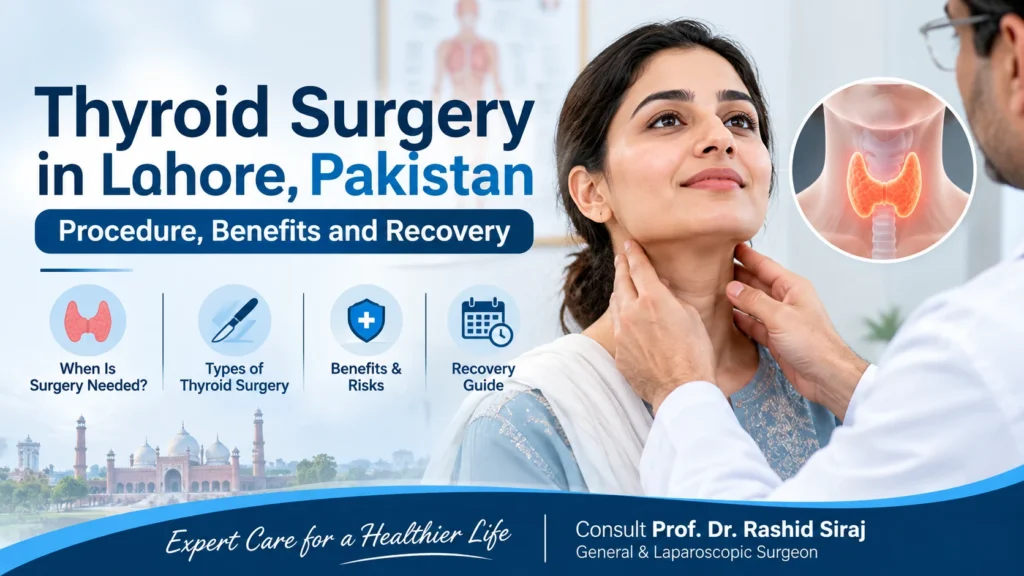
Depending on individual circumstances and how much thyroid tissue needs removing, different types of surgery may be performed.
Total Thyroidectomy
This is removal of the whole thyroid. It may be used for specific cases of thyroid cancer, large goitres and specific other thyroid conditions.
Individuals undergoing total thyroidectomy usually require lifelong thyroid hormone replacement.
Partial Thyroidectomy
Part of the thyroid is removed.
Hormones may still be sufficiently produced in the remaining thyroid tissue. However, some individuals may still require medication and regular testing.
Hemithyroidectomy/Thyroid Lobectomy
One lobe of the thyroid is removed. It may be suitable in some cases of nodules or conditions affecting one lobe.
The correct surgery will be discussed with you by your surgeon.
How is Thyroid Surgery Performed?
Generally, thyroid surgery is performed under general anaesthetic.
The surgery may involve:
Administration of general anaesthetic.
An incision is made in the lower front region of the neck.
The affected section or whole thyroid gland is removed.
During the surgery, care will be taken to avoid damaging important structures. This includes nerve/s responsible for vocal function and parathyroid glands.
Finally, the incision is closed. You will be monitored throughout recovery.
The length of surgery will depend on individual cases.
Benefits
Thyroid surgery may be beneficial to the right patients.
Benefits may include:
Removal of suspicious / cancerous tissue.
Reduces pressure from an enlarged thyroid gland.
Eases symptoms of difficulty swallowing and difficulty breathing, caused by a goitre.
Treats specific conditions, where other treatments have been insufficient.
Allow detailed analysis of tissue to allow a diagnosis.
The benefits depend on the individual condition. It cannot be guaranteed that all symptoms related to thyroid conditions will be resolved.
Risks and Complications
As with any surgery, thyroid surgery may carry risks. Your surgeon should be able to advise you on what risks may apply.
Potential risks may include:
Changes in vocal function, either temporary or permanent.
Bleeding and bruising.
Infection
Low calcium levels caused by temporary or permanent dysfunction of the parathyroid glands.
Requirement for thyroid hormone replacement.
Serious complications are uncommon. However, correct medical evaluation and ongoing care is required.
Recovery
Recovery times will vary. Many people will be able to perform light tasks soon after surgery, depending on procedure and general health.
Following Surgery
Short-term (first few days): You may feel some discomfort in the neck, or irritation in the throat, and changes in vocal function. Please follow advice from your surgeon regarding medication and wound care.
Medium-term (first 1-2 weeks): As you recover, you may be able to increase activity. However, you should avoid excessive exertion until advised by your surgeon.
Longer-term: It may be advised to perform blood tests by your doctor to monitor thyroid hormone levels and calcium.
Living Without a Thyroid
Those undergoing total thyroidectomy generally require lifelong thyroid hormone replacement. Those undergoing partial thyroidectomy may also require medication, depending on the amount of thyroid tissue remaining.
Regular follow up can help monitor hormone levels and allow medication to be adjusted as required.
Cost of Thyroid Surgery in Pakistan
The cost of thyroid surgery in Pakistan will depend on various factors:
Type of procedure.
Facilities, and admission requirements in the hospital.
Surgeon’s fee, anaesthetic costs.
Investigations.
Care and medication post surgery.
To get an accurate estimate, please discuss your diagnosis and treatment requirements with the hospital/ surgical team.
Thyroid Surgery in Lahore with Prof. Dr. Rashid Siraj
It is important to choose an experienced surgeon. Careful assessment means it can be determined whether surgery is required, and which procedure may be appropriate.
Prof. Dr. Rashid Siraj, General and Laparoscopic Surgeon can offer advice and support for surgical conditions.
If you have a thyroid lump, goitre, suspicious nodules or have been advised that thyroid surgery may be considered, please make an appointment so we can discuss your reports and treatment.
FAQs
Is thyroid surgery considered major surgery?
Thyroid surgery is specialist surgery. It is performed under general anaesthetic. How complex it is depends on individual circumstances.
How long is recovery?
Recovery time will vary between individuals. Many people can perform light tasks within a few days. Full recovery may take longer.
Can I live a normal life after thyroid removal?
Many people can live a normal life after thyroid removal. Those who have a total thyroidectomy will require lifelong thyroid hormone replacement and regular monitoring.
Will I require surgery for every nodule in my thyroid?
No. Many nodules in the thyroid are benign and can be regularly monitored. Surgery may be considered depending on symptoms, imaging, biopsy results and other clinical information.
Will my voice be affected?
Changes in voice may be seen temporarily. Damage to the nerves controlling the voice is a known complication and can sometimes lead to persistent changes.